Morocco’s Insurance Supervisory Authority Paves the Way for the Sector’s Future
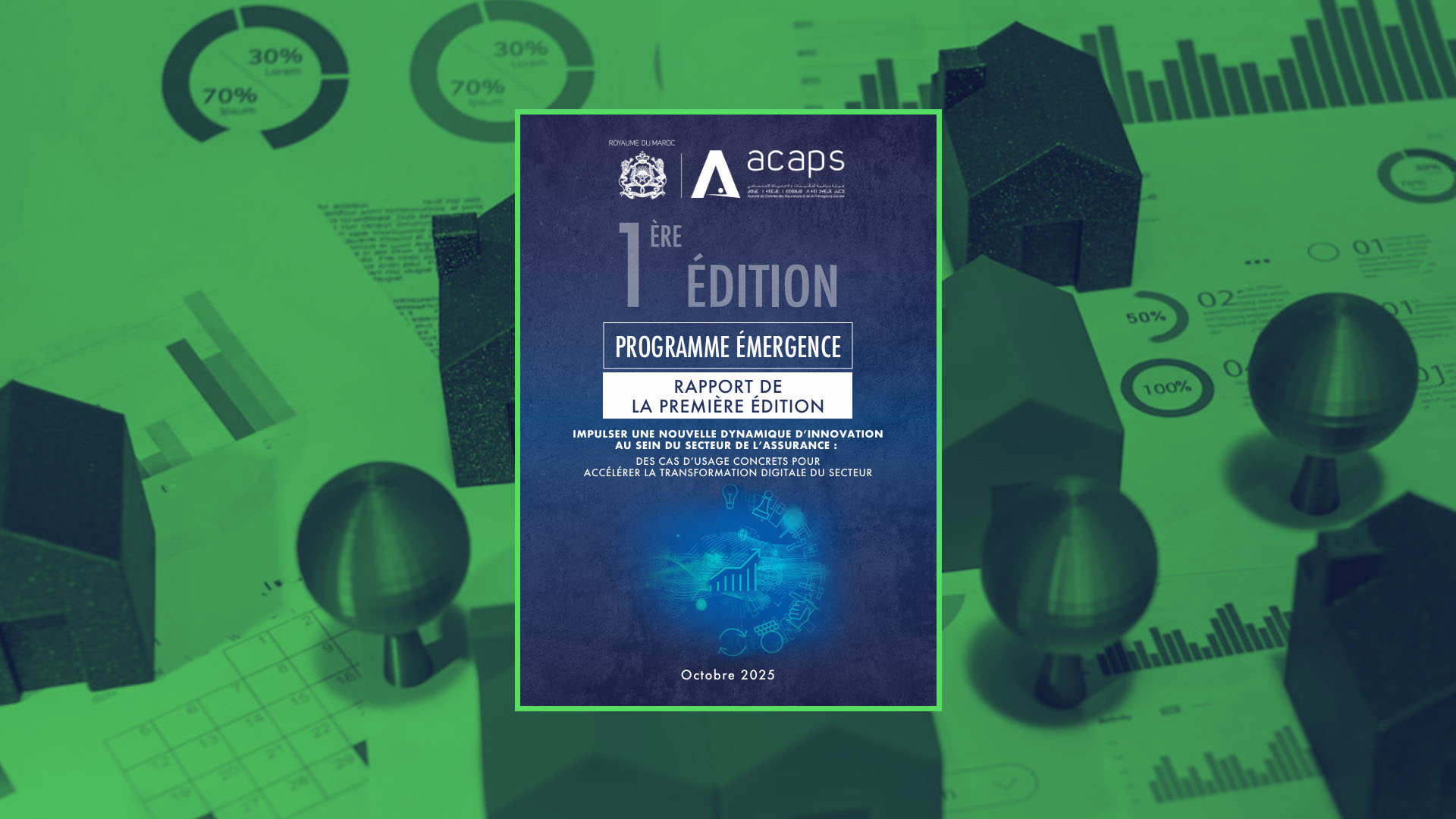
The Morocco’s Insurance and Social Welfare Supervisory Authority (ACAPS) leads the effort to embed innovation at the heart of the sector’s transformation. This article examines how the “Emergence Program”, initiated by ACAPS, evolved from consultation to co-creation, and explores the strategic enablers that will determine whether these collaborative efforts can scale. Toward a digital and customer-centric Moroccan insurance ecosystem.
As detailed in the ACAPS Report on the 1st edition of the Emergence Program and Summary of results – 1st edition 2025 published in October 2025, the initiative – the Emergence Program – marks a clear shift from strategic intent to practical innovation. This program seeks to reimagine the sector’s operational and customer frameworks through collaboration between insurers, intermediaries, Insurtechs, and institutional partners. Its goal is straightforward yet ambitious: to make innovation a structural driver of competitiveness, inclusion, and resilience. While many regulatory initiatives in financial services stop at consultation, ACAPS’s program distinguishes itself through its co-construction methodology and tangible outcomes.
From consultation to co-construction
The Emergence Program’s design reflects a pragmatic approach to innovation governance. It began with a comprehensive consultation phase involving 24 interviews across the value chain. These covered key areas such as product design, underwriting, distribution, and claims management to identify pain points hindering digital efficiency and customer experience.
This was followed by a co-construction phase where over 45 institutions, organized into 5 thematic working groups (Product, Subscription, Distribution, Claims Management, Innovation Strategies), collaborated from April to June 2025 to develop practical solutions.
This process resulted in seven concrete use cases that address long-standing inefficiencies, from fragmented subscription systems to opaque claims processes. Each use case embodies a shared ambition: digitize, standardize, and simplify. Whether through a unified product development platform, AI-based advisory tools, or embedded insurance APIs, these initiatives move beyond experimentation toward scalable industrialization.
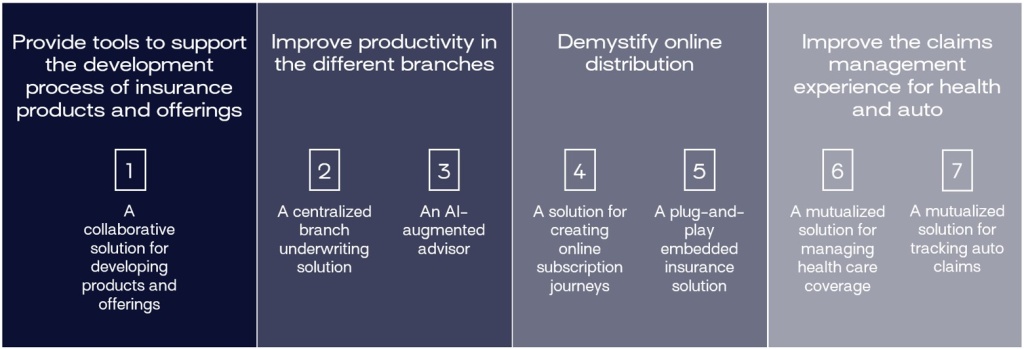
Crucially, the Program’s impact lies less in the technology itself than in its collaborative model. By opening innovation to all ecosystem players, including Insurtechs and digital intermediaries, ACAPS demonstrates that modernization cannot rely solely on top-down regulation. It also depends on creating frameworks where experimentation is safe, structured, and aligned with supervisory objectives. This collective approach is setting a precedent for how regulators can act as innovation catalysts without compromising prudential stability.
Scaling innovation through structure and commitment
The transition from pilot projects to market adoption now represents the Program’s greatest challenge, and opportunity. ACAPS identifies three enablers as essential to ensuring that innovation scales effectively: data interoperability, clear collaboration frameworks, and strategic leadership
- Interoperability: the Report stresses the need for standardized and secure data exchanges, possibly through an industry-wide API registry akin to Singapore’s APIX. Without such infrastructure, even the most promising use cases risk remaining siloed. Creating a common language for data sharing would not only streamline operational processes but also stimulate partnerships across insurers and technology providers.
- Collaboration frameworks: ACAPS proposes developing a library of standardized agreements for API usage, partnerships, and co-development. This pragmatic step would reduce negotiation time, lower entry barriers for Insurtechs, and establish clear rules for data protection and liability. Thereby turning innovation into a predictable process rather than an ad-hoc initiative.
- Commitment: the Report makes clear that sustained innovation requires strategic alignment at the highest level. Without executive sponsorship and dedicated resources, digital transformation risks losing momentum. Senior management engagement ensures that technological advancements translate into measurable business outcomes: efficiency, customer experience, and long-term competitiveness.
For Morocco’s insurance sector, the Emergence Program offers more than a set of pilots; it provides a blueprint for collaborative modernization. Its success will depend on how effectively the industry embeds co-creation into its daily operations. The real test begins now: scaling innovation without fragmentation, ensuring inclusivity while maintaining regulatory integrity, and converting momentum into market transformation.
ACAPS’s Emergence Program illustrates a new paradigm for financial regulation: one that balances supervision with innovation. By combining structured dialogue, collective experimentation, and clear strategic direction, Morocco is building the foundations of a more digital, efficient, and customer-centric insurance ecosystem. If successfully implemented, the Program could position Morocco among the few jurisdictions turning regulatory foresight into tangible innovation. For the insurance sector, the message is clear: the future of competitiveness lies in collaboration, and the Emergence Program is showing how to make it work.