Payments trends: wallets, interoperability & digital money
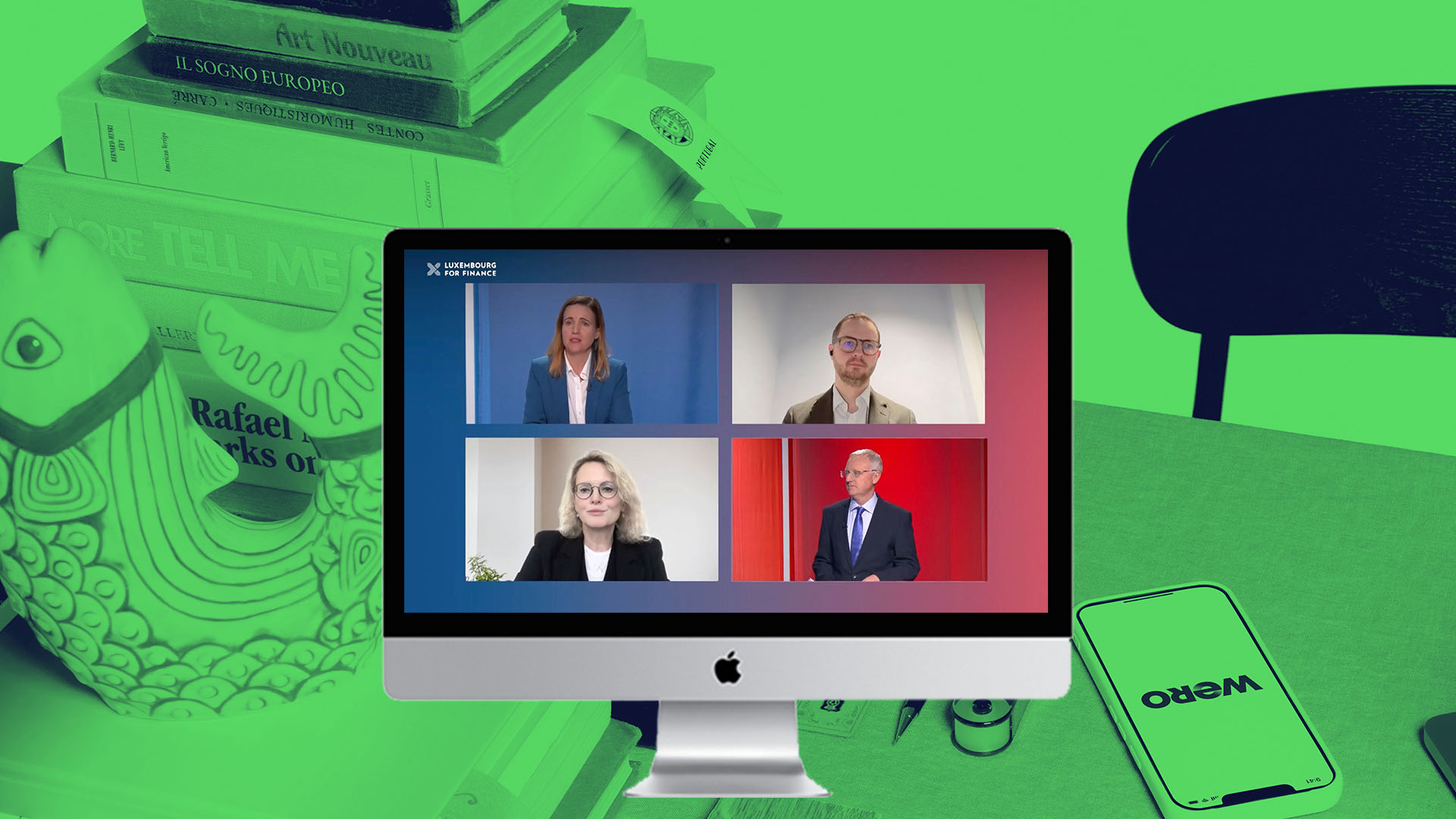
On March 4th, Luxembourg for Finance held its annual Digital Finance Forum, bringing together leading experts to discuss capital markets, artificial intelligence, and payments. This article mainly focuses on the event’s closing panel, which featured representatives from PayPal, Ripple, and EPI Company.
First, Gilles Roth, Luxembourg Minister of Finance launched the conference and shared the government’s approach to innovation in digital finance, from web3 and AI to payments. “We are living in a moment of fast change”, he said. “Technology is changing the world at a lightning pace, and so is geopolitics. In this context, Europe has to do more and invest in defense, energy, security, etc. to enable growth. And Digital Finance can help”.
He emphasized that Digital Finance is an integral part of the EU’s broader economic strategy: Europe needs to stay open and position itself as a force for cooperation. At the same time, efficiency in implementing rules and regulations is critical to enabling innovation and ensuring that the continent remains competitive, safe, and prosperous.
Turning to payments, Mr. Roth noted: “when payments are slow or costly, we feel it. When they work well, the economy works better. Nowadays, Instant Payments are becoming the new normal, and the upcoming PSD3/PSR package places strong emphasis on fraud prevention and consumer protection”.
Although Luxembourg is small in size, the Minister of Finance stressed that is deeply connected in markets and is built for cross border exchanges: it is pragmatic and anchored in legal certainty. He notably discussed DLT (Distributed Ledger Technology) and MiCA (Markets in Crypto-Assets), explaining that in such topics, “clarity is a competitive advantage, and legal certainty enables innovation”.
The rise of Wallets and the digital money opportunity
The event concluded with a round table discussion moderated by Ananda Kautz (Head of Innovation, Payments and Sustainability, ABBL) bringing together Martina Weimert (CEO, EPI Company), Sean Byrne (CEO, PayPal Europe) and Matthew Osborne (Policy Director for Europe & UK, Ripple).
The experts first discussed the main trend likely to shape the next 18 to 24 months. According to Martina Weimert, it revolves around wallets and A2A transactions. “The growth rate in the EU, whether in e-commerce or point of sales, is massive, and it follows a global trend”, she said. “With Instant Payments in Europe, we now have the way to offer something meaningful and cover literally all use cases, from P2P to NFC contactless transactions, QR Code, etc. We can offer solutions with a lot of added value services, seamlessly, into one single interface”.
Yet, better connectivity and interoperability is needed in the EU, as highlighted by Sean Byrne. He explained that the EU did a good job at fostering innovation but that there is no real connection, no common view, but that initiatives like EPI and European Payments Alliance will make a big difference in terms of harmonization.
Matthew Osborne focused on digital money, presenting its different forms (issued by a central bank, by a bank in tokenized assets, or stablecoin). He added: “it offers to bring greater efficiency to payments, and it is especially relevant for cross-border payments”.
EU payments sovereignty
The three panelists went on to discuss sovereignty in the EU. “At PayPal, we don’t see a conflict between sovereignty and openness: it makes sense to leverage local partners and global connectivity. We focus on the partnership-first model”, added Sean Byrne. Matthew Osborne agreed: “the EU might seek to protect domestic payments, but it also needs to make sure it is well plugged. This is especially true for digital markets that are borderless”.
According to Martina Weimert, “payment sovereignty means we have control of the value chain and do not depend on any other player – rails, standards, etc. We now have a common base that is 100% independent from any international player, which gives us an opportunity, especially in the current geopolitical context”. She explained that at EPI, number 1 priority was coverage, to enable interoperability, and even give the possibility for others to join and leverage the platforms EPI is establishing.
The interoperability topic was then further developed by Sean Byrne: “the base foundation level is very solid, but above, there are a lot of divergent levels. Consumers want it simple: their wallets need to be easy to use. Complexity needs to stay under the hood.” Martina Weimert advocated for what she described as a key development: “a joint acceptance standard, that all EU solutions could use, and which would facilitate the technical integration for merchants”.
How LUXHUB supports the deployment of Wero
The Technical Service Provider specializing in payments and/or compliance-related topics was selected by the Luxembourg banks that will begin offering Wero in the Grand Duchy in mid-2026.
Through its Wero Integration Layer solution, LUXHUB facilitates banks’ implementation of this new payment method, supporting various payment flows, offering a common technical solution, and also supporting wider post-payment activities’ scope.
A long-standing partner to more than 95 banks, payment and e-money institutions, LUXHUB will also deliver a Wero Acceptor Solution to institutions wishing to provide merchants and their end customers with an additional payment method, through Wero. This solution enables merchants to self-manage their own users, shops and payment, and post-payment operations through an online Merchant portal or via API. A user-centric solution, it is centered around simplified “payment requests” and payment lifecycle concepts. Moreover, it supports various single immediate payment use cases and technical integration modes available with Wero.